Leland Gaunt
Needful ThingsLeland Gaunt, the proprietor of Needful Things, is a supernatural dealer who turns private longing into a mechanism of control. He presents himself as a discerning shopkeeper who can define an object’s worth by the customer’s need; in practice, his bargains bind customers to seemingly minor acts that convert grievance into escalating violence. His polished courtesy masks a predatory nature, and the final confrontation reveals that the souls he claims not to want are literally carried in his bulging, screaming valise.
Identity and Introduction
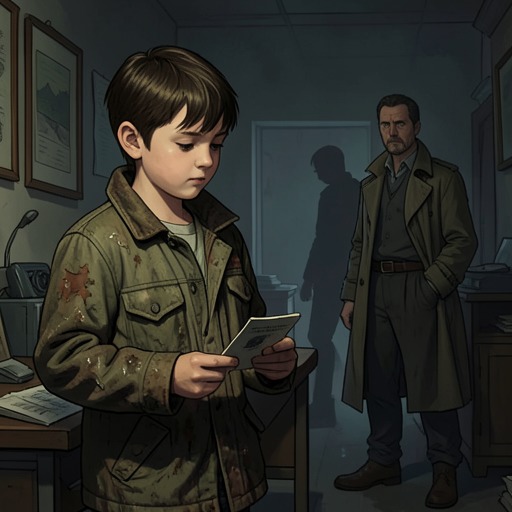
Gaunt introduces himself to Brian Rusk as a shopkeeper with an incomplete stock: most of his merchandise is due later that evening, but he already has a few interesting items and invites the boy to look around. The friendly sales pitch quickly becomes personal. Gaunt asks whether Brian has a mother, and steers the conversation toward the boy’s Sandy Koufax baseball card, asking how much he would pay for it. The attention is not merely commercial: Gaunt is testing what the card means to Brian and how its value can be used to draw him into a bargain.
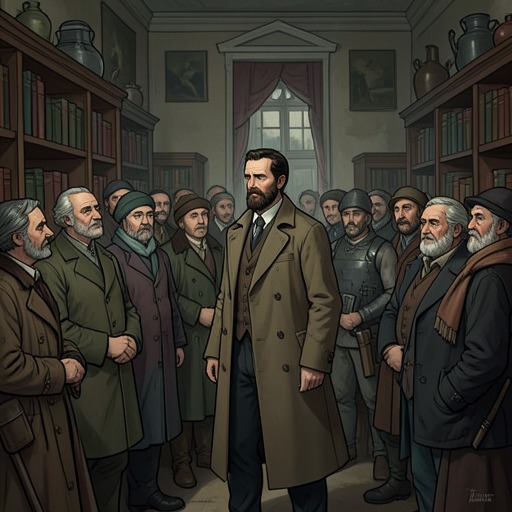
His manner makes the deception plausible. He can appear serious, urbane, and even beautiful; when Polly Chalmers leaves the shop, he watches her walk down the street, noting the contrast between her trim appearance and her misshapen hands. His smile broadens into something predatory. The impression is of a man who sees both the object a customer desires and the vulnerability that makes that desire exploitable.
Gaunt’s storefront gives that predation a respectable address. A sheet of deckle-edged stationery identifies Needful Things in Castle Rock, Maine, with Leland Gaunt as proprietor; its old-fashioned writing and language lend the business a cultivated air. When he welcomes a returning customer, he invokes the inviting formula, “Enter freely, and leave some of the happiness you bring!” The hospitality is part of the lure: his shop seems to promise pleasure while concealing the terms on which that pleasure is purchased.
The Shop and the Bargain
Gaunt’s method is to make price feel personal rather than fixed. When a customer names a price, he offers to sell an item for exactly twice that amount, turning a simple exchange into a negotiation shaped around the buyer’s own valuation. He describes his approach as defining worth by need. The distinction is crucial: the goods need not be rare or objectively valuable if Gaunt can make a customer feel that a particular object answers a private want.
Most of the items sold on one busy day are ordinary, but Gaunt makes a number of special deals during lulls when only one customer is in the store. The private setting separates each bargain from the scrutiny of the crowd and lets him tailor its terms. He insists to Danforth Keeton that what he is offering is not really a game, then reaches back to the Depression-era belief that Winning Ticket was a horse-player’s Ouija board. His sales pitch combines historical lore, showmanship, and calculated uncertainty.
That uncertainty is itself part of the transaction. Gaunt makes an object disappear like a magician’s trick, then tells Keeton there is one more thing. He acknowledges that Keeton cannot know whether he has been sold something that will work or merely a bag of dreams, the sort that become nightmares when tested. At the same time, he presents himself as a businessman devoted to satisfied customers and urges Keeton to take the toy. The assurances do not resolve the doubt; they help Gaunt convert it into consent.
The shop’s apparent ordinary business and its private bargains operate side by side. One customer, Lucille Dunham, a waitress at Nan’s Luncheonette, longs for a set of black pearls she believes she could never afford on her salary. Gaunt invites her to discuss the purchase away from the crowd. She leaves twenty minutes later with the pearls for thirty-eight dollars and fifty cents, delighted, but having also promised to play a prank on Reverend William Rose. The act seems to her harmless and satisfying because she resents his failure to tip her. Gaunt’s exchange gives her both the object and a way to indulge a grievance, joining desire to mischief without presenting the arrangement as a serious moral choice.
Recruiting Customers and Directing Resentment
Gaunt does not need to make each customer’s prank appear momentous. His leverage comes from attaching a small act to an existing sore point, then widening the consequences until the customer feels unable to withdraw. When Brian has already thrown mud at Wilma Jerzyck’s sheets, Gaunt appears to him as Koufax and reframes the prank as the beginning of an avalanche. He tells Brian that the question is no longer only about the baseball card: the boy has started something, and now faces a choice. The image makes an impulsive act seem irreversible, intensifying Brian’s fear while keeping Gaunt at the center of the supposed solution.
Gaunt also exploits moments when a customer is least able to resist. Hugh Priest rarely dreams in his later drinking-soaked life, but after a real dream he believes it has told him everything he needs to know and everything he is supposed to do. Gaunt understands Hugh’s impaired state and tells him decisively that he is not well, dispensing with small talk. Later, Hugh turns up at the shop barefoot and bare-chested, wearing a moth-eaten fox-tail around his neck; Gaunt receives him with a pleasant, expectant smile, as though this were an ordinary visit. The scene joins Hugh’s compulsive attachment to the object with Gaunt’s calm management of the man acting under its influence.
In other bargains, Gaunt presses on customers’ personal histories and fears. He reassures Polly that she can trust him, then tells her that to finish paying for her amulet she must help him play a trick on someone. He uses the secret of her child’s death in a San Francisco tenement as leverage, promising that no one in Castle Rock will learn it from him if she does as he says. The bargain therefore extends beyond the object and its apparent relief: Gaunt makes Polly’s grief and fear part of the price, converting a private vulnerability into an instrument of obedience.
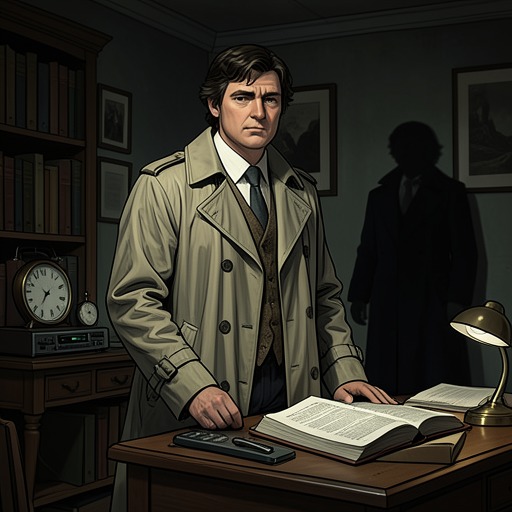
His manipulations can reach customers through appearances and voices as well as face-to-face persuasion. In a message to Ace Merrill, a tape recorder’s reels begin turning without any button being pressed. Gaunt’s voice warns Ace not to interfere and threatens consequences worse than what the Flying Corson Brothers had planned, declaring, “You're my boy now.” The supernatural intervention makes the coercion unmistakable: Ace is not being offered a free choice so much as claimed and directed.
A Predatory Persona
Gaunt’s self-image is encapsulated in the phrase “an electrician of the human soul.” The metaphor describes the role he assigns himself: he connects customers’ desires, resentments, and fears so that one person’s private grievance can trigger another’s. He does not merely sell objects; he makes separate lives conductors in a circuit of retaliation. From his window above Needful Things, he watches Castle Rock, the town that his business is helping to set against itself.
The civilized shopkeeper remains one of his most effective disguises. He can stand serenely behind a counter, speak softly, and rub his long-fingered hands together after a successful evening’s work. He also knows how to alter the atmosphere of a scene: when he laughs, the sound is compared to plates of rock moving deep underground, while his eyes shift rapidly through blue, green, brown, and black. The moment breaks the surface of ordinary salesmanship and exposes the unstable, inhuman presence beneath it.
Even so, Gaunt repeatedly denies interest in human souls to people he manipulates, from Hugh Priest to Slopey Dodd. The denial becomes grimly legible at the end: lies are his chief stock in trade, and the souls are not an abstraction but the contents of his case. His genial face and the claim that he offers only goods for sale cannot survive the physical evidence of what he carries away.
Exposure and Departure
As Castle Rock’s violence reaches its climax, Alan Pangborn sees the door of Needful Things open stealthily. At the edge of his vision, the figure leaving is dressed not in a sport coat or smoking jacket but in a black broadcloth coat. Alan is the only one to notice the departure. Gaunt carries an old-fashioned valise made of hyena-hide, its body puffing and bulging beneath his long white fingers. Faint screams seem to come from inside it, not as a sound Alan hears with his ears, but as something apprehended in his heart and mind. The image gives literal form to the secret beneath the bargains: Gaunt’s customers have become captives in his possession.
Gaunt briefly restores the appearance that has fooled Castle Rock. After taking a deep breath and closing his eyes, a shimmer passes over his face; when he opens them, the charming, urbane shopkeeper seems to have returned. He notices a paper snake on the sidewalk, grimaces, and kicks it into the gutter before holding out his hand to Alan. The gesture of ordinary civility is immediately overturned. Gaunt’s face loses its human aspect and becomes demonic, with deeply scored cheeks and eyes blazing orange, as he screams, “But NOT WITHOUT MY PROPERTY!” and lunges for the valise.
Alan takes the bag and backs into the street with Polly Chalmers beside him, raising the fountain of light-flowers so that their revolving glow falls across Gaunt and his Tucker Talisman. The confrontation makes possession the decisive issue: Gaunt reaches for what he regards as his property, while Alan carries the imprisoned souls beyond his grasp. After smoke from the burning Municipal Building blows across Main Street, Gaunt and his hellwagon are gone. His departure does not undo the damage he has set in motion, but the exposure of the valise and the loss of his claimed property strip away the final pretense that he is simply a clever merchant.
Narrative Role and Significance
Gaunt’s bargains turn the familiar language of shopping into a moral trap. Customers approach Needful Things seeking an object, but the exchange joins acquisition to a prank, a betrayal, or an act of revenge. Because the requested deed initially seems small, each buyer can treat the cost as separate from the pleasure of getting what they want. Gaunt’s method makes that separation impossible: the price is the damage that the bargain sets moving through the town.
The recurring contrast between need and worth defines his power. He presents himself as a man who understands what an object means to its buyer, and he is perceptive enough to identify the emotion behind the purchase. But this insight serves no care for the person before him. It lets him exploit desire, grief, shame, and resentment, then make manipulation feel like an ordinary transaction. His expertise is not simply persuasion; it is the construction of a chain in which a customer’s own grievance appears to justify the next harm.
The final valise gathers that whole system into one image. The shop’s goods could be treated as harmless objects, and Gaunt’s customers could imagine their pranks as isolated acts; the screaming case reveals what the exchange has concealed. Gaunt is both the maker of the town’s destructive connections and a collector of the people caught in them. His elegant welcome and his demonic claim of ownership are two faces of the same business: he invites customers to enter, then treats what he has taken from them as his property.